If you have ever waited “a bit longer” hoping a villa price would drop, only to watch your preferred dates disappear, you are not alone. Figuring out the best time to book villas is one of the most common headaches for holiday planners: reserve too early and you worry you overpaid, wait too long and the best views, layouts and weeks are gone. The good news is that villa bookings follow fairly predictable patterns, and once you know them, choosing when to book becomes much less stressful.
In this guide, we break down the best time to book villas for both summer and winter holidays, from peak July and August weeks to Christmas and New Year getaways. We also look at shoulder seasons, when the same property can cost noticeably less, and at last-minute deals, where waiting can pay off if you are flexible. You will find tips on matching villa types to each season, plus a simple booking calendar to plan your year.
Why Timing Matters When You Book Villas
Unlike hotel rooms, villas come in strictly limited numbers. A popular coastal area might have only a handful of properties with the layout you need, so once your ideal week is gone, your options shrink fast. Miss a peak week in July or over Christmas and New Year, and you may end up settling for a villa that is further from the beach, smaller than you hoped, or missing the private pool that sold the trip in the first place.
Timing also has a direct impact on your wallet. For the very same property, peak-season rates can run 30-50% higher than shoulder-season rates. That difference alone can pay for flights, a car rental, or a few excellent dinners. Booking early does not mean paying more; in many cases it simply means paying the fair rate before demand pushes it upward.
First pick goes to early bookers
The best villas in any destination tend to share the same features: unobstructed sea views, a well-positioned private pool, and enough bedrooms and bathrooms for a larger group without anyone drawing straws. These properties are also the ones that fill first. Early bookers get their choice of the top layouts, while latecomers browse whatever is left, often at a higher price.
This matters even more when you travel with a group. Coordinating several families or couples is hard enough without compromising on bed counts or shared spaces. Reserving well ahead of the summer or winter season keeps everyone happy and removes the stress of watching your preferred weeks disappear from the calendar.
Best Time To Book Villas For Summer Holidays
Summer villas reward early planners more than almost any other type of accommodation. For trips in June or September, aiming to book around four to six months ahead usually gives you a solid choice of properties. July and August are different: those weeks fill fastest, so a window of six to nine months ahead is the safer target.
The reason is simple supply. Popular destinations often see 60-80% of their peak-week villas already reserved by the time you are just three months out from travel. At that point you are not really choosing a villa anymore; you are choosing from whatever is left.
Families tied to school holidays should move even faster. If your dates are fixed by the school calendar, locking in your villa right after the previous summer ends is one of the smartest habits you can build. You get the widest selection and the best shot at the layout and location your family actually needs.
- Book larger groups first. Big villas with five or more bedrooms are the rarest inventory in any destination, so group trips should treat the nine-month mark as a real deadline.
- Use June and September as pressure valves. If July and August options are already thin when you search, shifting your week to early June or late September typically widens availability immediately.
- Set a reminder for the booking window. Many owners and agencies open the next summer’s calendar shortly after the current season ends, so marking the date helps you be among the first to reserve.
- Confirm cancellation terms before committing early. Booking far ahead usually means paying a deposit months in advance, so read the refund conditions carefully before you lock in a peak week.
Best Time To Book Villas For Winter Holidays
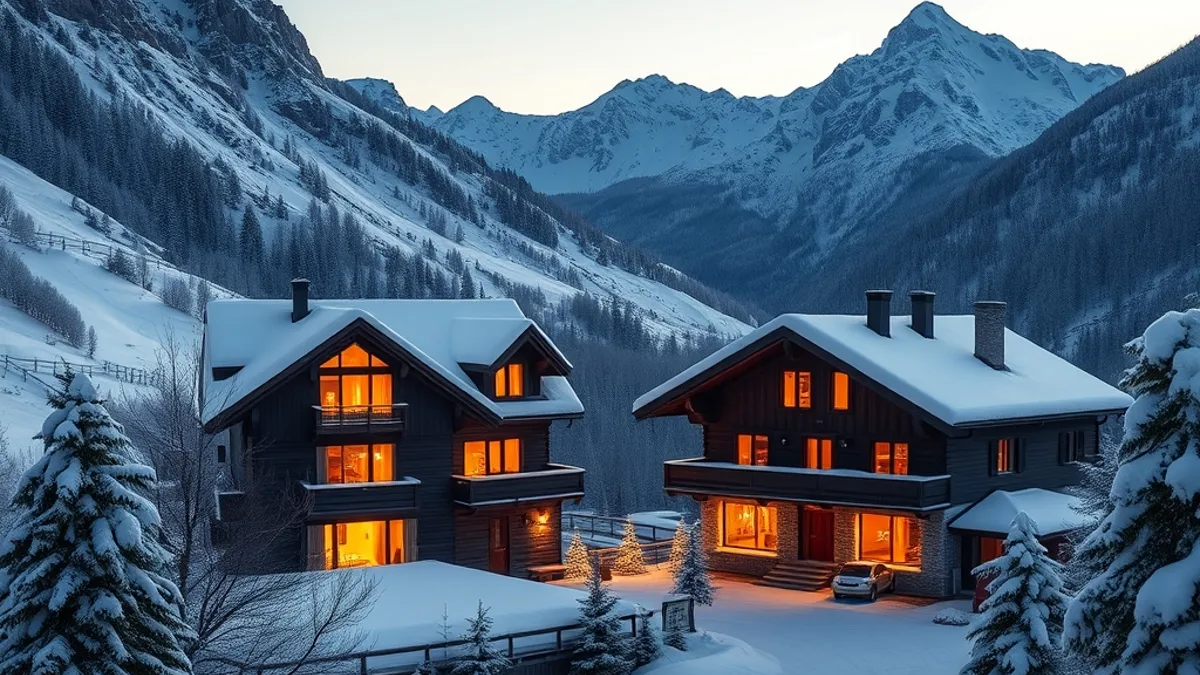
Winter villa bookings run on a different clock than summer ones. For most ski-season weeks, three to five months of lead time is usually enough, but Christmas and New Year are a different story: those festive weeks often need six months or more of advance planning. Villas with ski-in access, fireplaces and space for a large family dinner get reserved first, and owners know they can hold out for full-price bookings on those dates.
The weeks that disappear fastest are February half-term and the heart of the ski season. In alpine resorts and Nordic destinations, families lock their dates almost a year ahead, so availability for those weeks can be thin long before spring. If your dates are fixed by school calendars, treat those weeks like July in the summer market and book as early as you realistically can.
January, on the other hand, is the quiet reward for flexible travelers. Stays outside the festive rush often cost noticeably less while the snow, the saunas and the long evenings are all still there. If you have been dreaming of an alpine escape, a resource like this Zermatt travel planner for ski trips and premium travel deals can help you match dates to slopes and villas.
- Book festive weeks before summer ends. Christmas and New Year villas with dining space for ten or more guests are often gone before autumn, especially in small alpine villages where only a handful of large properties exist.
- Check the slope distance, not just the map. In February half-term, a villa a short drive from the lifts can mean long parking queues, so walkable or ski-in locations carry a real premium those weeks.
- Ask about early-season snow reliability. Early December weeks are cheaper, but in lower alpine resorts snow cover can be limited, so Nordic or high-altitude destinations are safer bets for those dates.
- Confirm heating and hot tub details in writing. A January stay depends on a well-heated interior and a working outdoor hot tub, so get those features confirmed before you pay the deposit.
Shoulder Seasons: Cheaper Weeks With The Same Comfort
If your travel dates have some wiggle room, the shoulder months are where villa bookings quietly get easier. Weeks in May, June, September and January can cost 20-40% less than the same villa during peak weeks, simply because demand drops off while the property itself stays exactly the same. The pool is still private, the view has not moved, and the terrace still gets the same evening sun.
The savings go beyond the nightly rate. In shoulder months, popular destinations usually have far more availability, so you can be pickier about layout, location and views instead of taking whatever is left. Owners and managers also tend to have more negotiating room when a week is likely to sit empty, so it never hurts to ask politely about a longer stay discount or a small reduction, especially for a two-week booking.
Who benefits most from shoulder-season travel
Shoulder weeks suit couples and flexible travelers best. If you are not tied to school holidays, you can swap late July for early June or mid-September and get a calmer version of the same destination. Beaches, restaurants and local attractions are typically less crowded too, which makes a villa stay feel more relaxed without changing anything about where you stay.
January deserves a special mention for winter travelers. It sits outside the festive rush but still delivers proper winter scenery in alpine and Nordic regions, often at a noticeably gentler price. Just be realistic about what each month offers: September seas may be warmer than June ones in some regions, and ski conditions in early December can vary. Check snow reports, local weather patterns and current rates before you commit, and remember that shoulder-season pricing is a tendency, not a promise.
Last-Minute Villa Deals: When Waiting Pays Off
Last-minute villa deals are real, but they reward flexibility rather than luck. Owners and agencies dislike empty weeks, so when a property is still unsold around 2-4 weeks before arrival, discounts often start to appear. These price cuts can be genuinely steep, yet they come with a catch: by then, the strongest properties have already been claimed, and the remaining stock is what you have to work with.
The trade-off is choice. At short notice, villas with sea views, private pools and prime locations are usually gone, and what remains may be inland, smaller, or less polished. If you are relaxed about all three, you can land a very good deal. If you have your heart set on a specific view or layout, waiting rarely works in your favor.
This strategy suits small groups and flexible dates far better than peak weeks. Two travelers or a couple can comfortably fit into a leftover one- or two-bedroom villa, and shoulder dates in May, June, September or January tend to have more unsold stock. Trying it for July, August, Christmas or New Year is a gamble, since those weeks sell out months in advance. For a worked example of how short-notice deals play out in a city-break context, see this Geneva travel deals and weekend booking guide.
- Set alerts with several agencies: last-minute discounts often appear and disappear within days, so a saved search for your dates and destination beats manual checking.
- Contact owners directly: for a week that is about to go empty, a polite direct enquiry can unlock a better rate than the listed price, especially outside peak season.
- Check the cancellation policy twice: some discounted last-minute rates are non-refundable, so make sure your travel plans are firm before you commit.
- Be realistic about bed counts: villas still open at short notice often sleep fewer people, which is why this approach works best for couples and small parties rather than large groups.
- Have a backup destination: if nothing suitable appears in your first-choice area within the 2-4 week window, being open to a nearby region keeps the deal alive.
Choosing The Right Villa Type For Each Season
The villa you pick should match the season you are traveling in. A property that feels perfect in July can feel drafty in January, and a cozy alpine chalet can feel dark and stuffy in midsummer. Before you book, look closely at how each villa is built for the weather it will face during your stay.
What Summer Villas Need
For summer trips, outdoor living is the whole point. Prioritize villas with a private pool, a proper outdoor dining table with seating for your whole group, and shaded terraces or pergolas where you can escape the midday sun. Read the listing photos carefully: a terrace that faces full sun all afternoon is far less usable than one with a covered section or mature trees for shade.
Cooling matters just as much as the view. Check whether bedrooms have air conditioning, ceiling fans, or at least good cross-ventilation with screens. In hot regions, a villa with thick stone walls often stays naturally cooler than a lightweight modern build. If you plan to cook, an outdoor kitchen or grill area is a genuine bonus, since indoor kitchens can become uncomfortable on hot evenings.
What Winter Villas Need
Winter stays flip the priorities. Look for a fireplace or wood stove as a centerpiece, a sauna or hot tub for post-ski evenings, and well-insulated, heated interiors throughout. Ask whether heating is included in the rate or charged separately, since running costs can add up in colder months. Underfloor heating and double glazing are small details that make a big difference after a day in the snow.
Location should follow the light and the season too. Coastal and fjord villas shine in summer, when long days and calm water make terraces and swim spots the main attraction. Arctic and alpine villas are built for winter, with snow-ready access, cozy interiors, and in northern destinations, a real chance of seeing the northern lights from your own deck. Match the villa type to the season and you will get far more out of every night you stay.
Planning Your Villa Booking Calendar
So, how far ahead should you actually book? For summer trips, aim for 4-6 months out, or 6-9 months if you want July or August. For winter stays, 3-5 months works well, but Christmas and New Year often need 6+ months. If your dates are flexible, shoulder months like May, June, September and January can save you 20-40% on the same villa.
Waiting until the last minute is only worth it if you can travel off-peak and accept limited choice, since real deals typically show up 2-4 weeks before arrival. Book early for peak weeks, go late for quiet ones, and you’ll get the dates, view and price you wanted without overpaying. Have a question or a booking story of your own? Leave a comment or share this article.