Glamping in safari tents looks dreamy online: canvas walls, a four-poster bed, elephants strolling past your deck at sunrise. Then you start checking prices and the dream gets complicated. Rates for what looks like the same experience can swing from a couple hundred dollars a night to well over a thousand, and it’s hard to tell what’s fair, what’s inflated, and when to actually pull the trigger on a booking.
This guide breaks it down. We’ll look at what glamping in safari tents actually costs across budget, mid-range and luxury levels, and how the season you choose, roughly June–October in classic safari regions versus the greener months, can swing the price more than the tent itself. You’ll also find practical advice on how far ahead to book, how to pick the right camp for your budget, ways to pay less without downgrading your experience, and where a safari-tent stay fits into a wider luxury trip. By the end, you’ll know how to book smart instead of just booking fast.
What Glamping in Safari Tents Actually Costs
Safari-tent glamping covers a surprisingly wide price range, and knowing where you sit on that spectrum makes planning much easier. At the budget end, simple safari tents with shared bathrooms or basic facilities typically run $100–200 per night for two people. These camps still give you the canvas walls, the sounds of the bush at night and the thrill of waking up in the wild, just without frills like private plunge pools or a butler.
Step up to the mid-range and you’ll find camps with en-suite bathrooms, comfortable beds and full board included. Expect roughly $250–500 per night at this level. For most travelers, this is the sweet spot: you get genuine comfort, good food and guided activities without the eye-watering price tag of the top tier.
What luxury tented lodges charge
At the high end, luxury tented lodges start near $600 per night and can exceed $1,500. These properties compete with the best hotels anywhere: private decks, plunge pools, outdoor showers, fine dining and dedicated staff who handle everything from laundry to sundowner drinks. If a special occasion is driving the trip, this level delivers an experience that’s hard to replicate.
Always check what the rate includes
Before comparing nightly prices, find out whether each rate is all-inclusive. Some camps bundle meals, game drives and park access into the price, while others quote accommodation only. When meals, drives and park fees are paid separately, they can add up quickly, so an all-inclusive rate often looks far better value than a cheaper headline price.
Ask for a full breakdown before you commit. Park and conservation fees exist at most reserves and change regularly, so check the current rate with the park authority or your operator rather than relying on older figures. A few minutes of comparison can make a big difference to your final bill.
When to Go: Seasons That Change the Price
Timing is the single biggest factor in what you’ll pay for a safari tent, and it’s often more important than the camp itself. In the classic safari regions, the dry high season runs roughly June–October. Wildlife viewing is at its best: animals gather around water sources, vegetation is thin, and game drives are consistently rewarding. The trade-off is that everyone knows this, so rates sit at their peak and small camps fill up fast.
The green season advantage
From November to May, the landscape turns lush and green after the rains, and camps drop their prices significantly. Expect discounts of around 20–40% off high-season rates, which can be the difference between a mid-range tent and a luxury one for the same budget. Crowds thin out too, so you’ll often share a waterhole sighting with just a handful of vehicles instead of a convoy. The downsides are real but manageable: rain showers, taller grass that makes animals harder to spot, and in some regions, migratory animals moving elsewhere.
If your dates are flexible, the shoulder months are where smart travelers land. June and November typically straddle the seasons, offering decent game viewing with noticeably softer pricing and better availability than the peak. November in particular can feel like a sweet spot: the rains are just beginning, camps are quieter, and many run green-season specials. Check with your chosen camp about local conditions, since rainfall patterns vary between East and Southern Africa and can shift from year to year.
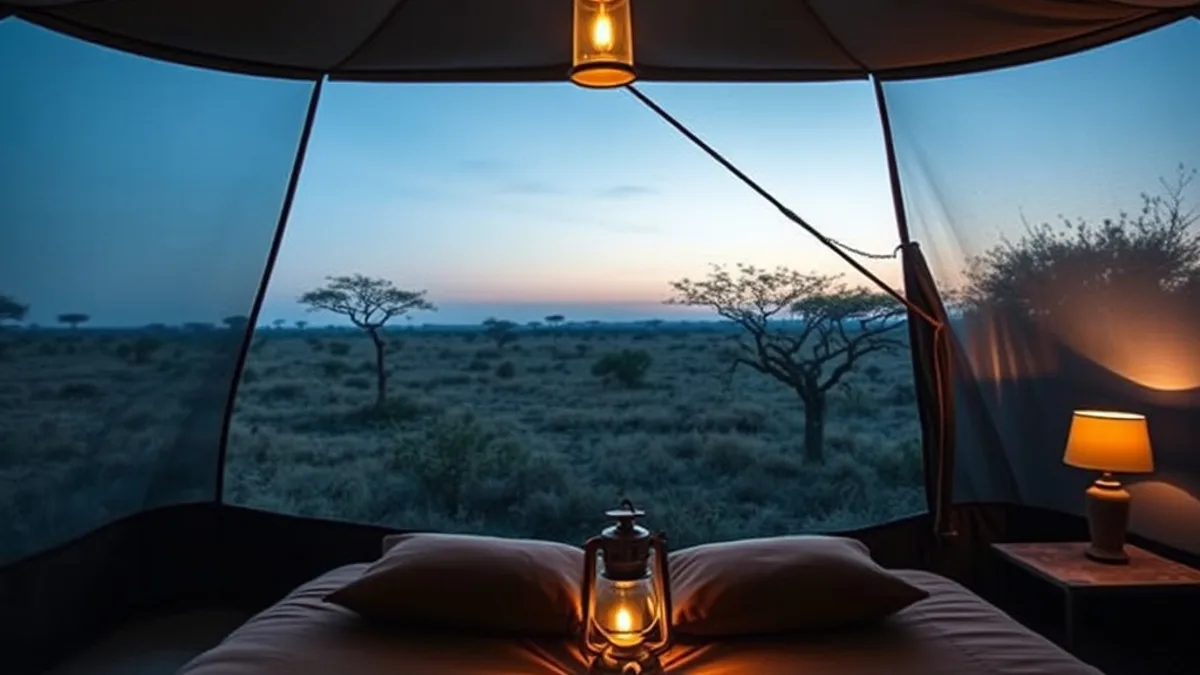
How Far Ahead to Book
Safari tents are a scarce resource, and that scarcity shapes your booking timeline. The most desirable camps hold a limited number of units, so a single family reunion or a travel-agency block can wipe out weeks of availability. If you have your heart set on a specific camp during the dry season, treat it like booking a wedding venue rather than a hotel room.
As a general rule, reserve high-season safari tents six to twelve months in advance. This matters most at small camps with fewer than fifteen tents, where intimate settings and personal service are exactly what make them fill up first. Popular combinations, such as a well-known camp paired with prime wildlife-viewing months, can be fully booked a year out.
Shoulder and green season stays are far more forgiving. You can usually book two to three months ahead and still find good options, and occasionally you will spot last-minute discounts if a camp has unsold space. The trade-off is weather risk and, in some regions, thicker vegetation that makes animals harder to spot.
Also plan around minimum stays. Many camps require two to four nights during peak months, which affects how you structure a multi-stop itinerary.
- Ask about waitlists: if your preferred camp is full, some operators keep cancellation lists and will call you when a tent opens up, sometimes just weeks before travel.
- Book the rest of the trip around your tent dates: lock in the scarce safari nights first, then arrange flights and any city or beach stops to match, since those are usually easier to change.
- Check deposit and cancellation terms early: long lead times often mean larger deposits and stricter cancellation windows, so read the policy before committing.
- Confirm the minimum-stay rule for your exact dates: it can differ between peak weeks and the edges of the season, so ask for the specific nights you want rather than assuming a blanket rule.
Choosing the Right Tent and Camp for Your Budget
Not all safari tents are equal, and the price gap usually comes down to what is actually inside the canvas. A tent with an en-suite bathroom, hot running water, reliable power for charging cameras, and Wi-Fi will sit well above a simple unit with a shared ablution block. Guided game drives included in the rate also justify paying more, since arranging drives separately at a basic camp often erases the savings.
Camp size matters just as much. Small camps with roughly 5 to 12 tents deliver real intimacy: fewer vehicles at sightings, staff who remember your name, and dinners shared around one table. The trade-off is that these places fill fastest and often have strict minimum stays. Larger tented lodges with 20 or more units usually offer swimming pools, spas, and better availability, which can matter if your dates are fixed.
If you are traveling with children or friends, look at family tents or two-bed configurations. They cost more per night than a standard double, but sharing one large unit is often cheaper than booking two separate tents, and it keeps everyone under one roof for early morning wake-up calls.
Before comparing prices, check exactly what each rate covers:
- En-suite versus shared facilities: some budget tents have flush toilets and bucket showers nearby, while others offer indoor bathrooms with hot water on demand — a big difference on a cold morning.
- Power and connectivity: ask whether charging is available around the clock or only at set hours, and whether Wi-Fi reaches the tents or only the main lounge.
- Drives and guiding: confirm whether game drives are in open safari vehicles with a qualified guide, or whether you pay per drive on top of the nightly rate.
- Meals and drinks: full-board rates include all meals, while some camps charge separately for drinks and laundry, which adds up over a multi-night stay.
- Private versus shared decks: at the higher end, private verandas, plunge pools, or outdoor baths are the features that push a tent into the luxury bracket.
Booking Smart: Ways to Pay Less Without Downgrading
Once you have picked a camp and season, the easiest savings come from simply asking. Camp owners and reservations teams often have offers they do not advertise prominently, so email them directly and ask about green-season specials, long-stay rates (many camps discount if you stay a week or more), resident rates if you live in the region, and last-minute deals if your dates are flexible. A short, polite email costs nothing and can shave a meaningful amount off a mid-range rate.
Bundle flights and camp through one operator
Booking a flight-plus-camp package through a safari operator can typically save around 10–15% compared with arranging each piece separately. Operators buy tented-camp space in bulk and pass part of that margin on, and they also handle the tricky logistics—light aircraft transfers, park permits, inter-camp travel—that can quietly inflate a self-booked itinerary. Get two or three quotes for the same itinerary so you can compare like for like, and check exactly what each package includes.
Groups have leverage too. If you can travel with four to eight people, ask camps about group rates or exclusive-use pricing, where your party books the entire camp. Mid-range camps in particular often discount for this, and exclusive use means flexible meal times and game drives tailored to your group rather than a shared schedule. Split between friends, the per-person cost can drop well below the standard nightly rate while the experience actually improves.
Where Safari-Tent Glamping Fits a Luxury Trip
A Two-Centre Itinerary That Actually Works
A tented safari and a Swiss mountain stay complement each other better than you might expect. After several mornings of pre-dawn game drives, when your alarm goes off at five and the coffee is drunk in the dark before the vehicle leaves, a lakeside or alpine stopover in Switzerland gives you the chance to slow down completely. The rhythm of a safari is intense in a wonderful way, but it is still a schedule. Pairing it with a destination where the only decision is sauna or swim makes the whole trip feel like a true luxury holiday rather than a back-to-back checklist.
Logistically, it is simpler than it sounds. Most travelers route through major European hubs on the way to and from safari regions, so adding a Swiss leg often means little more than adjusting an existing connection. Check flight durations and routing options with your operator, as these vary widely depending on your safari destination and the season you travel.
Balance Early Game Drives With Recovery Time
The smartest pairing is to schedule the wellness portion after the safari, not before. Game drives reward fresh, rested eyes, but they also compress sleep and keep you outdoors in dust and sun for hours. Ending the trip at a wellness-focused retreat lets your body catch up while the memories settle. A stay like the one described in Breathe Mountain Calm at The Alpina Gstaad, Switzerland shows exactly the kind of restorative contrast that works: alpine air, spa rituals and long, unhurried meals after days on the savanna.
Think of it as a trade of intensities. The safari gives you adrenaline and spectacle; the mountain stopover gives you stillness and space. If your budget only stretches to a mid-range tented camp, this two-center approach often delivers more perceived luxury than upgrading the camp itself, because the recovery days make the safari nights feel even more special.
Wrapping Up Your Safari-Tent Glamping Plan
Safari-tent glamping can cost anywhere from about $100 to over $1,500 per night, so a “fair” rate depends entirely on the comfort level and season you choose. The single biggest lever on price is timing: booking 6–12 months ahead for the dry season, or opting for the green season instead, does more for your budget than any other decision.
The rest comes down to comparing what each rate actually includes and asking about specials before you commit, so you pay for the experience rather than the marketing. If you have been on a safari-tent trip yourself, or have a question about planning one, leave a comment below or share this article with a fellow traveler.