Choosing among Zermatt resorts is trickier than in most Alpine towns. The village is entirely car-free, so you cannot pull up to the door with your luggage, the streets twist into mazes that confuse even returning visitors, and the price of a room can swing wildly depending on one thing: whether the Matterhorn fills your window. A Matterhorn-view room typically costs 30-50% more than a village-facing one, so the wrong pick means overpaying for a view you barely see or lugging suitcases further than you planned.
This guide breaks the decision into manageable pieces. We look at how the car-free setup shapes where you should stay, compare the three main areas — the village center, the Sunnegga side and Winkelmatten — and show how to secure a genuine Matterhorn view without paying double. We also cover the best seasons, booking windows, the journey from the airport, and the facilities that actually matter when cars are out of the equation.
Why Zermatt’s Car-Free Village Shapes Your Resort Choice
Zermatt bans private cars from its streets entirely, and that single rule shapes almost every practical decision about where you stay. Visitors leave their vehicles in the parking garages at Täsch and ride the 12-minute shuttle train into the village. Once you step off the platform, your luggage cannot simply roll into a trunk — it travels by electric taxi or resort shuttle instead. Before you book, check whether your resort runs its own transfer service from the station, and confirm how it works. Some will meet you at the platform; others expect you to call ahead or arrange pickup through the front desk.
The village itself is compact, but compact does not mean flat. Zermatt sits on a sloping valley floor, and even a “short” walk can involve a steady climb with a suitcase in tow. Resorts within a 10-15 minute walk of the station spare you the logistics of coordinating an electric taxi for what is often just a few hundred meters. If you are staying farther out — toward Winkelmatten, for example — a pre-arranged transfer becomes genuinely useful rather than optional.
The upside of no traffic
The car-free status is not just a logistical quirk; it is a large part of why Zermatt feels special. Streets are pedestrian-only and remarkably quiet — no engine noise, no delivery trucks rumbling past at dawn. That calm transforms the resort terraces. A south-facing balcony or garden terrace here is genuinely usable: you can sit out with coffee in the morning sun and actually hear the village bells, not traffic. When comparing resorts, factor this in. The same terrace that would sit beside a road in a normal alpine town becomes a real living space in Zermatt, and resorts lean into it with outdoor seating, heated blankets and mountain-facing loungers.
Where to Stay: Village Centre vs Sunnegga vs Winkelmatten
Zermatt’s resorts cluster in three distinct areas, and each one changes the feel of your stay. The village center puts you right on Bahnhofstrasse, where restaurants, bakeries and shops sit within a couple of minutes’ walk. The trade-off is the view: buildings crowd the streets tightly here, so many rooms look onto rooftops or the slopes opposite rather than the peak.
The Sunnegga side sits slightly uphill from the main street, and that elevation works in your favor. Resorts there tend to have wide, open sightlines toward the Matterhorn, especially from upper-floor terraces. You lose a little of the central buzz but gain the postcard scenery from your balcony.
Winkelmatten, at the quieter hamlet end of the village, is the choice for skiers who want calm evenings and short mornings. It sits close to several lifts, so you can be on the slopes early without crossing the busiest part of town. In summer, it’s a peaceful base with easy access to walking trails heading out of the village.
- Village center: best for travelers who want to step out of the resort and be surrounded by dining and shopping, and who plan to enjoy the Matterhorn from viewpoints like the Gornergrat railway rather than from their own room.
- Sunnegga side: check whether the resort has a lift or funicular connection downhill, since the uphill position that creates the open views also means a short climb back from the main street.
- Winkelmatten: evening dining options are thinner here than on Bahnhofstrasse, so look for resorts with a strong in-house restaurant if you plan to stay in after ski days.
- Family consideration: Winkelmatten’s calmer streets and gentler pace suit parents with young children, while the center suits groups who want nightlife and après-ski within walking distance.
Getting a Guaranteed Matterhorn View Without Overpaying
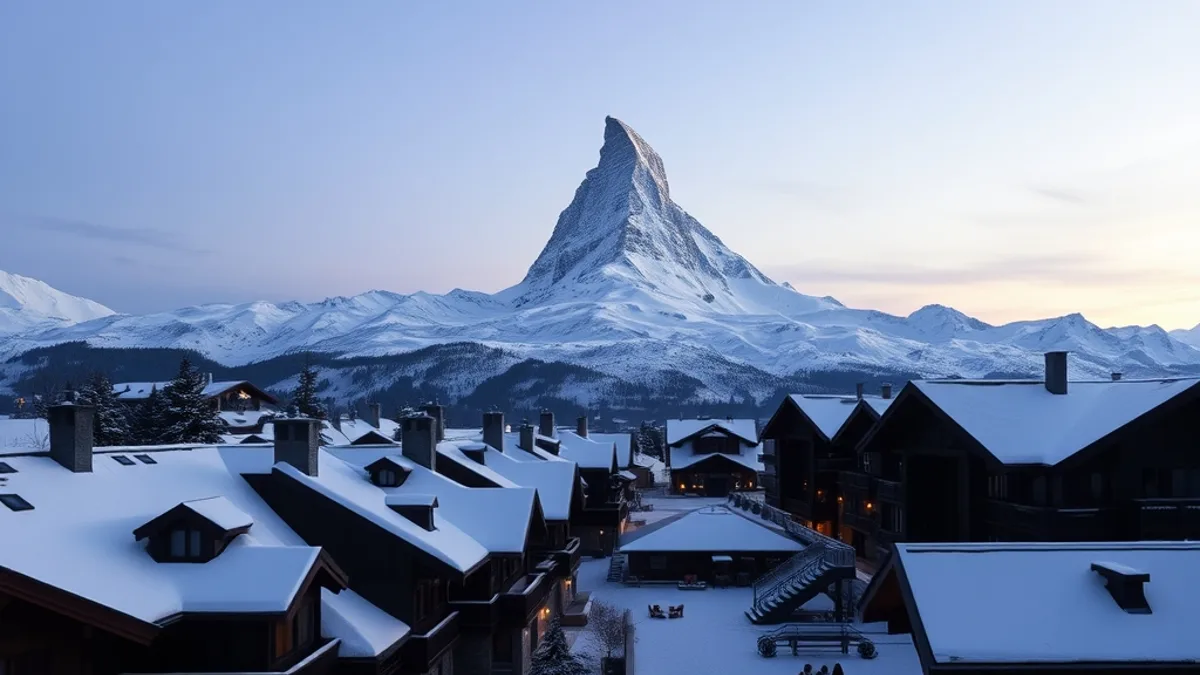
Here’s the honest truth about Matterhorn views: not every room in a Zermatt resort sees the mountain, and the difference between a peak-facing room and a village-facing one can make or break your stay. North- and west-facing rooms usually have the peak in their sights, while south-facing rooms often look toward the sun and the valley instead. Before you pay anything, email the resort and ask them to confirm the room’s orientation and floor level in writing. A vague “many of our rooms have views” is not the same as a specific answer about your actual room.
What the View Premium Really Costs
Matterhorn-view rooms typically cost 30-50% more than equivalent village-facing rooms, so it’s a real line item in your budget, not a rounding error. If you’re going to pay the premium, the sweet spot is an upper-floor corner room: you get height above neighboring rooftops plus windows on two sides, which widens your sightline considerably. Lower-floor rooms in the compact village center are the most likely to disappoint, since buildings and terrain can block the peak entirely. If you want a benchmark for what a premium view category should feel like at booking stage, the approach in this Zurich luxury resorts booking guide for a lakefront escape translates well: confirm the exact room category, not just the hotel.
One more thing travelers underestimate: the mountain plays hide and seek. Cloud and fog can swallow the Matterhorn for hours or even whole days, so a guaranteed-view room category or flexible cancellation terms matter more here than at almost any other alpine destination. Ask whether the resort reclassifies you or compensates if the promised view is obstructed, and favor bookings you can adjust if the weather forecast turns sour for your dates.
Best Seasons for a Zermatt Resort Stay
Zermatt is genuinely a year-round destination, but the experience changes dramatically with the seasons, and so do your resort options. Ski season runs from late November to late April, with the busiest stretches falling over Christmas-New Year and again in February. During these peaks, resorts run at full capacity, lifts have queues on sunny weekends, and rates sit at their highest.
Summer is the quieter counterweight. From June to September, hikers take over: the lifts run for walkers and mountain bikers, the meadows around the village bloom, and resort rates typically sit below winter highs. It’s a relaxed time to enjoy a spa hotel, since wellness areas are far less crowded than in February.
The shoulder windows are the catch. From late April through May and again in October into November, many resorts close entirely for refurbishment and staff holidays. If you’re dreaming of a quiet, discounted stay, check opening dates carefully before you book, because your first-choice hotel may simply be shut.
- Powder-focused skiers should aim for late January or March, when the slopes are still reliable but the Christmas-New Year and February crowds have thinned.
- Early June can leave some higher hiking trails muddy or snow-covered, so July and August offer the most dependable trail conditions.
- Autumn stays in early October reward photographers with clear air and golden larches, though you’ll need to confirm which lifts are still running.
- Shoulder-season closures often mean fewer dining options too, since some village restaurants close alongside the hotels.
Booking Windows, Prices and Reaching the Village
Zermatt rewards early planners, especially in winter when the village’s limited bed count meets heavy demand. Prices swing widely depending on view, season and star level, so knowing when to book and how the journey works will save you both money and stress. The process is simpler than it looks once you break it into steps, so here is a practical sequence to follow.
- Decide your travel dates first. If you want peak ski conditions, aim for the Christmas-New Year period or February, but know that February half-term weeks sell out first. Summer dates offer more flexibility, though popular weeks still fill up.
- Reserve winter stays 4-6 months ahead. This window gives you the fullest choice of room categories and often better rates than last-minute bookings. For summer, booking a couple of months out is usually sufficient, but earlier is safer for Matterhorn-facing rooms.
- Compare rate ranges across resort tiers. Rates swing widely by view and season, from mid-range spa hotels to flagship five-star palaces. Decide whether the premium for a peak-facing room fits your budget before comparing properties.
- Plan the rail journey from the airport. The train from Zurich or Geneva takes roughly 3.5-4 hours including the 12-minute Täsch shuttle. Scenic routing via the valley adds time, so check connections when booking flights.
- Confirm your booking details in writing. Double-check room category, cancellation terms and any view guarantee before paying the deposit, and reconfirm close to arrival.
Summer bookings follow a looser rhythm, but don’t leave them too late. Lift schedules and trail conditions vary through the season, so once you have rough dates, ask the resort what will be running at that time of year. A short email before you commit can spare you a week when key lifts are down for maintenance.
One more tip: if your dates are flexible, shifting by even a few days outside the busiest weeks can open up both availability and better prices. Midweek arrivals are often easier to secure than weekend-to-weekend stays, and some resorts hold their best room categories for guests who commit early. The same early-booking logic applies across the Swiss Alps, and the Grindelwald resort booking guide for mountain travel and scenic escapes covers similar ground if you are weighing up more than one base. Whichever village you choose, treat the booking window as part of the trip planning, not an afterthought. Lock in your dates, confirm the small print, and let the mountain handle the drama.
Resort Facilities That Matter in an Alpine Car-Free Village
The single biggest difference between Zermatt resorts isn’t the size of the rooms or the breakfast spread — it’s the wellness area. The top properties here treat spa space as the main event: heated pools with floor-to-ceiling windows facing the Matterhorn, panoramic saunas where you can watch the peak while your shoulders thaw after a ski day, and quiet relaxation rooms built around the view. If a mountain-facing pool tops your wishlist, compare facilities carefully before booking, and remember that the view premium you’d pay for a bedroom often doesn’t apply to a spa chair. If you love this style of stay, our guide to Lucerne resorts with mountain backdrops and premium wellness spaces covers similar properties on the lakeside.
Winter logistics that save your mornings
In ski season, small details decide how early you reach the lifts. Prioritize resorts with a proper ski storage room and heated boot dryers — stepping into warm, dry boots at 8 a.m. is worth more than any breakfast buffet. Many resorts also have an on-site lift-pass desk or partner counter, so you can sort your passes without queuing in town. Ask about these services when booking, since they vary widely between properties.
Zermatt’s streets are compact but sloped, and hauling luggage uphill after a long transfer gets old fast. Elevators that run from street level to reception, in-resort electric shuttles, and luggage porter service are all worth prioritizing — especially for families or anyone with mobility concerns. Confirm which of these your resort offers before you arrive, as they’re not universal even among upscale properties.
Wrapping Up Your Zermatt Resort Plan
Choosing a resort in Zermatt comes down to three decisions made in the right order. First, pick your area: village center for dining on your doorstep, the Sunnegga side for wide-open sightlines, or quiet Winkelmatten near the lifts. Then ask the resort to spell out exactly which way your room faces and which storey it sits on before you pay the deposit, since Matterhorn-facing categories typically run 30-50% more and clouds can hide the peak anyway. For winter, lock in your booking 4-6 months ahead.
Match the season to your travel style. Ski season runs late November to late April, summer hiking shines from June to September, and the shoulder months offer quieter villages if you accept that many resorts close for refurbishment. Get those choices right and the car-free streets and maze-like lanes stop being a puzzle and become part of the charm. Have a favorite corner of Zermatt or a question about your trip? Leave a comment or share this article.