You have booked your first safari lodge, and now the questions start piling up. What does a typical day actually look like? What should you pack, and how do game drives work? Will you need cash for tipping? If you are feeling a mix of excitement and uncertainty, you are in good company—almost every first-timer arrives with these exact worries.
This guide walks you through everything you need to know before check-in. We will explain what a safari lodge actually is, from tented camps to different price tiers, and when to go—keeping in mind that dry season game viewing peaks June to October in East and Southern Africa, and that you should typically book 6-12 months ahead for those dates. You will also learn how game drives work, what to pack, and how tipping and extras fit into your budget. By the end, your first lodge stay will feel far less like a leap into the unknown.
What a Safari Lodge Actually Is: Camp Types and Price Tiers
When people say “safari lodge,” they usually mean a permanent building with solid walls, real doors, and rooms or suites arranged around a main area with a dining room, bar and pool. But the term also covers tented camps, which vary enormously. At the basic end, you sleep in sturdy canvas tents on platforms with en-suite bathrooms. At the luxury end, “tents” are vast canvas suites with king beds, freestanding bathtubs, private decks and sometimes a plunge pool. Don’t assume a tent means roughing it.
Price is the clearest way to sort your options. Mid-range lodges typically run roughly USD 250-600 per person per night, all-inclusive. Ultra-luxury camps in famous reserves can exceed USD 1,500 per person per night, and the top names charge well beyond that in high season. In general, you pay for exclusivity: fewer tents, larger private tracts of land and highly experienced guides.
What’s included in the rate
Most all-inclusive rates cover your accommodation, all meals, and the two daily game drives that structure your day. What’s often billed separately are park and conservation fees, which can add a meaningful amount per day, so ask your operator to itemize them before you book. Premium drinks, spa treatments and laundry are also frequently charged to your room even at otherwise inclusive lodges.
National parks vs. private concessions
Where the lodge sits matters as much as its comfort level. Lodges inside national parks usually must follow strict rules: staying on roads and closing at dusk, so no off-road driving and no night drives. Lodges on private concessions bordering or adjacent to those parks can typically drive off-road to follow predators, conduct night drives and offer walking safaris. If close-up sightings and after-dark activity appeal to you, prioritize a concession-based camp, and check exactly what your chosen lodge permits before booking.
When to Go and How Far Ahead to Book
The dry season: prime time for wildlife
Most travelers aim for the dry season, which runs from June to October across much of East and Southern Africa. During these months, vegetation thins out and water becomes scarce, so animals gather around rivers, waterholes and remaining pans. That concentration of wildlife makes sightings easier and more dramatic, and skies tend to be clear for photography.
The trade-off is demand. For peak dry-season dates, especially July through September in famous reserves, book 6-12 months ahead. The most sought-after lodges in popular areas often fill up a year in advance, so if you have your heart set on a specific camp, early planning pays off.
Green season: value, babies and beautiful light
The green season, generally the wetter months outside the dry window, is underrated. Rates drop, the landscape turns lush and photogenic, and many animals give birth, which means good odds of seeing newborns and attendant predators. The downside: thicker bush and scattered water sources make animals harder to spot, and afternoon storms can interrupt a drive.
If you want the famous migration river crossings in the Serengeti-Masai Mara ecosystem, those typically fall between July and October. Exact timing shifts with the rains each year, so check with your operator rather than fixing your dates around a single week.
A practical approach: prioritize the dry season for your first safari, but ask about shoulder weeks at the edges of the season, which can combine decent viewing with softer prices.
A Typical Day at a Safari Lodge
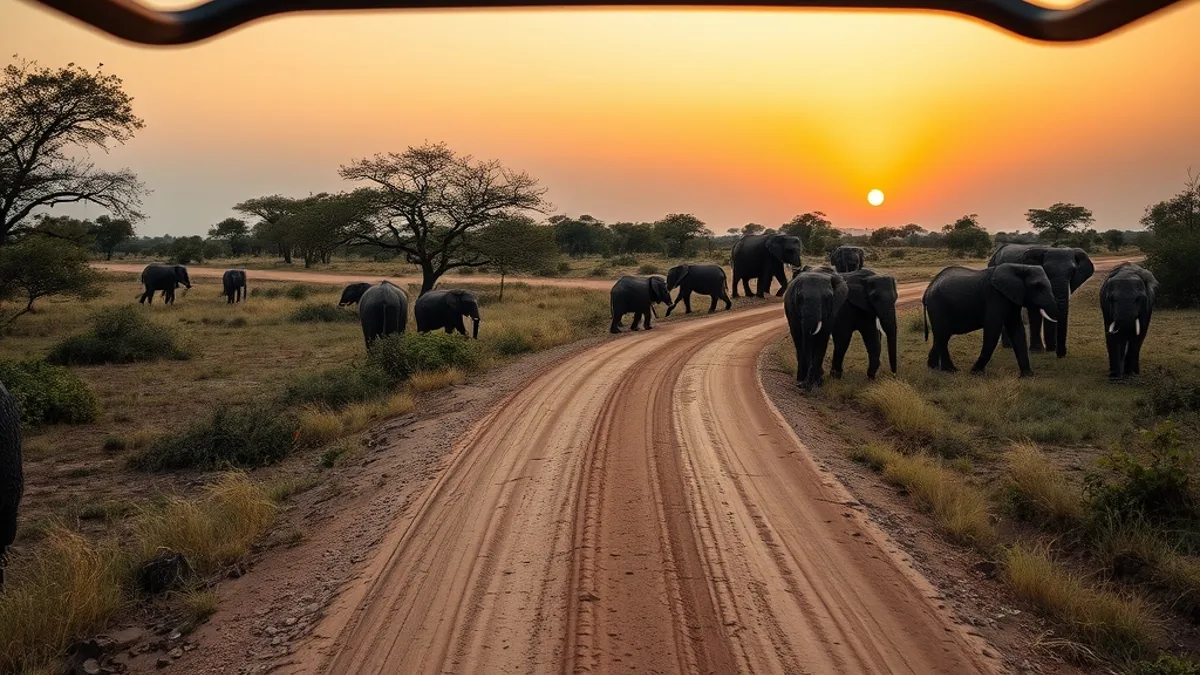
If it is your first safari, the rhythm of a lodge day may surprise you. Days start early, move slowly in the middle, and finish with good food and a crackling fire. The schedule is not arbitrary: it is designed around the hours when animals are most active, which means the drives anchor everything else. Here is how a typical day usually unfolds, though exact times vary by lodge and season.
- Wake-up call around 05:30-06:00. A staff member knocks softly at your door, often with a tray of coffee, tea and something light like rusks or fruit. You will not eat a full breakfast yet; that comes later, after the drive.
- First game drive. You head out at dawn, when predators are still active and the air is cool. Drives last about 3-4 hours, with a mid-drive coffee break at a scenic spot so you can stretch your legs and use the facilities.
- Brunch around 10:00. Back at camp, a proper cooked breakfast or brunch awaits, and it is usually generous enough to carry you through the day.
- Midday downtime. This is your rest window. Swim, book a spa treatment, nap, or watch the waterhole from the viewing deck. Animals rest too, so nobody feels guilty about doing the same.
- Afternoon tea around 15:30. A light spread of cakes, sandwiches and drinks appears before everyone gathers for the next drive.
- Second game drive around 15:30-16:30. The evening drive often ends at a scenic spot with sundowners, a safari tradition of drinks at sunset, before the short ride back to camp.
- Dinner around 19:30. Back at the lodge, dinner is often served family-style or by candlelight, followed by drinks around the fire before you turn in early.
The schedule may look rigid on paper, but it is built around animal behavior rather than convenience. Dawn and dusk are when wildlife is most active, so the drives anchor the day and the hours in between are genuinely yours. Most first-timers find they adjust to the early starts within a night or two, especially once they see what the sunrise delivers. If you want to skip a drive or sleep in, most lodges are happy to accommodate; just let the staff know in advance so they can plan vehicles and meals accordingly.
Game Drives, Guides and Bush Etiquette
Game drives are the heart of any safari stay, and they work differently from most first-timers expect. You will share an open 4×4 vehicle with a professional guide, and at many camps a second team member called a spotter sits up front scanning for animals. Vehicles typically take up to six guests in tiered seating, so everyone gets a decent view, but it pays to ask your lodge about group sizes before booking if you want extra space.
Your guide sets the tone, so treat them as a partner rather than a chauffeur. They read tracks, know animal behavior and understand where predators are likely to move. Stay seated and keep your voice low when you are near lions, leopards or hyenas, since standing up or sudden movement can change how animals react. Never ask the driver to off-road in a national park: rules there are strict, and your guide can lose their permit for breaking them. In private concessions the rules are more relaxed, which is exactly why off-road driving is possible there.
Radio communication shapes what you see on a drive. Sightings are shared between vehicles, so when a leopard is found, several cars may arrive within minutes. Ask your guide how their camp handles radio etiquette, and expect a few vehicles gathered around a lion kill or a rare sighting during busy periods. Good guides take turns and keep the scene calm rather than crowding it.
- Walking safaris: These guided bush walks, where you track animals on foot with an armed guide, are usually only possible in private concessions, not national parks.
- Night drives: Spotlights after dark reveal genets, bushbabies, leopards on the move and other nocturnal animals, but again this is typically limited to private land.
- Vehicle rotation: Many camps rotate seating each drive so every guest gets the front row at some point during a multi-night stay.
- Speak up: If you want to focus on birds, smaller creatures or photography angles, tell your guide at the start of the drive; most will happily tailor the outing.
What to Pack for a Safari Lodge Stay
Packing for a safari lodge stay is less about fashion and more about function, and the first rule is color. Choose neutral shades like khaki, olive and light brown, which blend into the landscape and keep you unobtrusive on game drives. Avoid dark blue and black clothing: tsetse flies are drawn to those colors, and their bites are painful enough to make you regret that navy t-shirt. Bright colors can also spook animals and reflect in photos.
The bigger surprise for most first-timers is the cold. Open vehicles move fast, and temperatures can start near 5°C on an early morning drive and climb to around 25°C by midday. Dress in layers you can peel off as the sun rises, and stow them in your day bag rather than leaving them at camp. A light beanie and gloves take up almost no space but make those first chilly hours far more comfortable.
Bag choice matters more than you might expect. If your itinerary includes light aircraft transfers between camps, soft duffel bags are usually required, and a 23 kg (50 lb) limit is standard. Hard-shell suitcases often won’t fit in a small plane’s baggage hold, so confirm luggage rules with your operator before you fly.
A few items deserve a spot in every safari bag:
- Binoculars: a pair per person (8×42 or 10×42 is a popular size) lets everyone watch a leopard at the same time instead of passing one set around the vehicle.
- Zoom lens: something in the 200-400 mm range gets you close to wildlife without needing to ask the guide to move the vehicle.
- High-SPF sunscreen: the African sun is intense even on overcast days, and the open vehicle offers zero shade for hours at a stretch.
- Insect repellent with DEET: apply it at dawn and dusk when biting insects are most active, especially around ankles and wrists.
Money Matters: Tipping, Extras and Connectivity
Money works a little differently at a safari lodge than at a city hotel, and it catches many first-timers off guard. Tipping is customary and genuinely important: guides and camp staff often rely on tips as a meaningful part of their income. A good rule of thumb is to budget roughly USD 10-20 per guest per day. Many lodges run a communal tip box at reception that gets split among the whole team, plus a separate envelope for your guide. Ask at check-in how each camp prefers to handle it.
Here’s the detail that surprises people on all-inclusive rates: “all-inclusive” usually covers your room, meals and game drives, but not everything. Premium wines and spirits, spa treatments and laundry service are frequently billed to your room as extras. If you’re celebrating with a bottle of champagne or booking a massage during midday downtime, expect it to appear on your final bill, so leave a little room in your budget for those add-ons.
Cash and connectivity tips
Carry some US dollars in small bills — ones, fives and tens — for tips and for buying curios at local markets or roadside stalls. Large bills can be hard to change in rural areas, and vendors may not accept cards. Check that your notes are relatively recent, as older dollar series are sometimes refused. The same planning mindset applies to other big trips: if a mountain escape is next on your list, this Zermatt ski resorts guide for snow retreat and premium chalet living breaks down what to expect on that side of the travel budget too.
Wi-Fi is common in main lodge areas, but connections can be slow, and many remote tented camps have no internet at all or only patchy satellite service. Treat a safari as a chance to disconnect rather than planning to stream or work. If you truly need to be reachable, download maps and messages beforehand and check with your operator about local SIM options.
Your First Safari Lodge Stay, Summed Up
A first safari lodge stay is far less mysterious than it seems. Your day follows a simple rhythm: two game drives of roughly 3-4 hours each, one early in the morning and one in the late afternoon, with relaxed downtime at the lodge in between. Time your trip for the June to October dry season, and remember that the best lodges ask for 6-12 months of booking lead time, so plan early.
Packing comes down to neutral layers in a soft duffel bag, and it’s smart to budget USD 10-20 per day for tips to round out the experience. Once you understand the rhythm of the day and the basics of bush etiquette, everything else falls into place naturally. Have a question about your first safari, or a tip of your own? Leave a comment below or share this article with a fellow traveler.